From Clutter to Clarity: The Power of Personal Databases
Discover how moving from chaotic notes to a structured personal database can transform your digital life, and learn how Mind Dump empowers you to effortlessly build your own custom productivity systems—without writing a single line of code.
What is a Database? Imagine a giant cardboard box. Every time you get a receipt, take a photo, jot down a brilliant idea, or receive a bill, you toss it into the box. Months later, when you need to find your car insurance renewal, you have to dump the entire box on the floor and sift through hundreds of papers one by one.
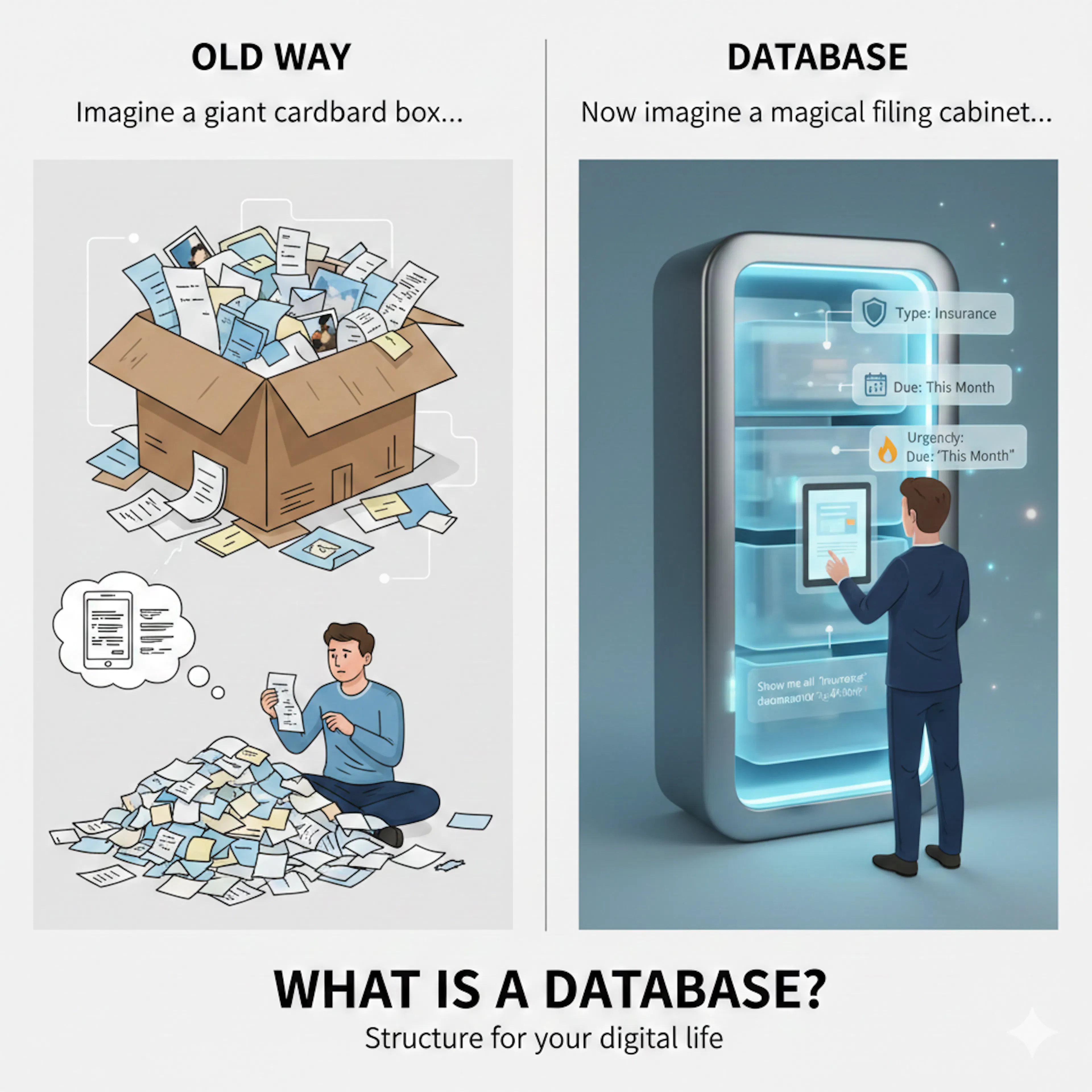
Unfortunately, this is exactly how most of us treat our digital lives. We throw our thoughts into endless, messy text documents or basic note-taking apps.
Now, imagine a magical filing cabinet. When you put a piece of paper inside, you attach tiny, invisible tags to it: What type of document is this? When is it due? How urgent is it? Later, when you need your car insurance, you don't search manually. You simply ask the cabinet, "Show me all 'Insurance' documents that are due 'This Month'," and it instantly hands you the exact piece of paper.
That magical filing cabinet is what computer scientists call a database. In computing, a database doesn't just store information; it gives your information structure. It allows a computer to instantly sort, filter, and connect thousands of pieces of data so you never have to waste time searching manually again.
The Rise of the Personal Database For a long time, databases were highly complex tools used only by massive corporations to track global inventory or millions of customer records. But why should big companies have all the power?
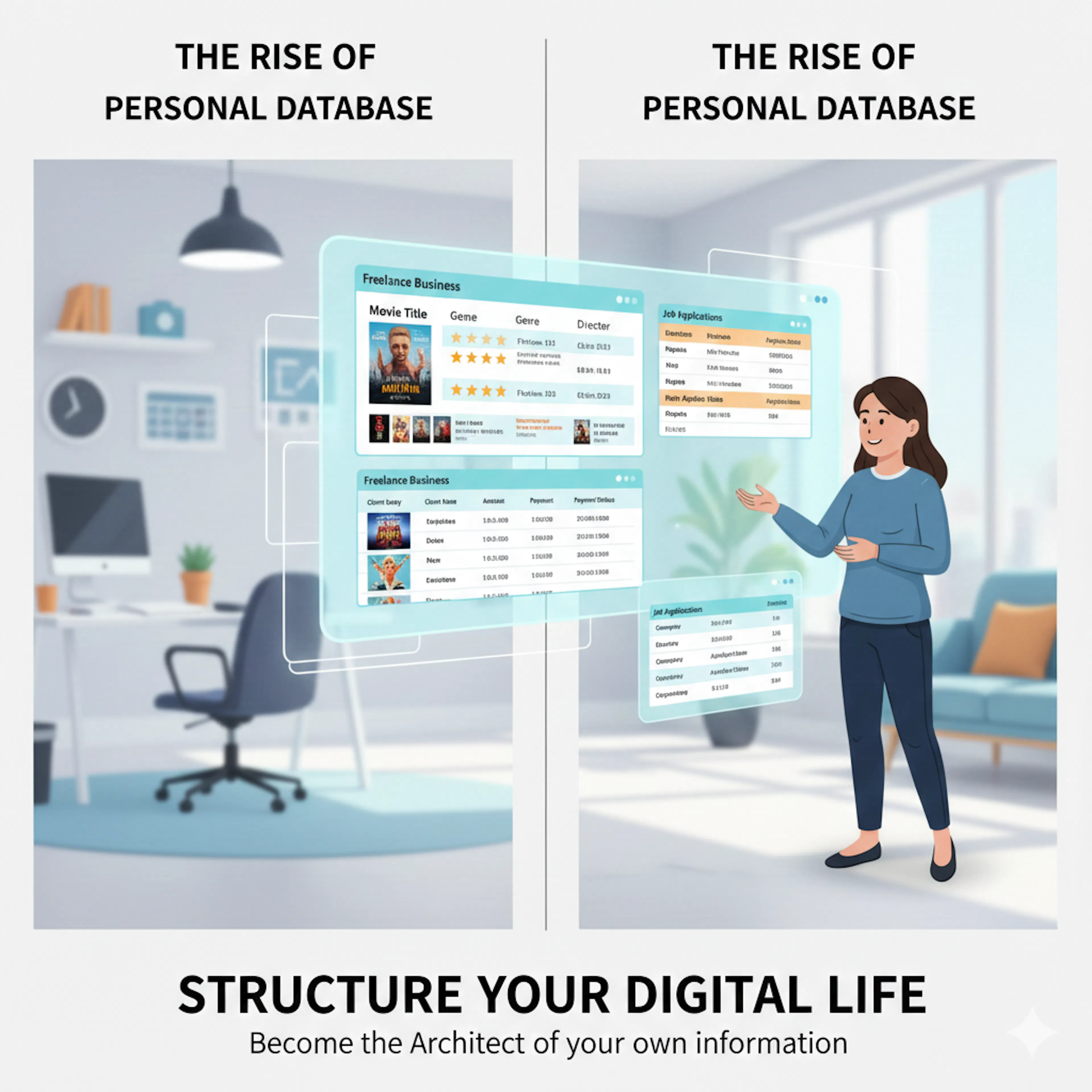
A personal database takes this immense organisational superpower and puts it directly in your hands. Instead of keeping a chaotic "To-Do" list in a Word document or tracking your job applications in a clunky spreadsheet, a personal database lets you build structured systems for your life.
Want to track your movie collection? You can build a database with specific slots for "Genre", "Director", and "My Rating". You want to organise your freelance business? Build a database with slots for "Client Name", "Invoice Amount", and "Payment Status". It transforms you from a passive note-taker into the architect of your own information.
The Mind Dump Approach This is exactly where Mind Dump changes everything. Mind Dump isn't just a place to write things down; it is a beautifully simple engine designed to help you build your own perfect personal databases—which we call Sessions.
Instead of forcing you into a rigid, one-size-fits-all system, Mind Dump lets you create dedicated, independent Sessions for different areas of your life. You might create a "Date-Centric" Session specifically for your daily tasks, and a separate "Knowledge Base" Session to act as a personal CRM for your business contacts.
The real magic happens with Custom Fields. Mind Dump lets you define exactly what information belongs in each Session. You can easily add checkboxes, currency trackers, dropdown menus, or even highly secure, encrypted "Secret" fields to your records. By doing this, you aren't just making a list—you are essentially designing your own custom productivity app without writing a single line of code.
Best of all, Mind Dump strictly separates your raw data from how you look at it. Once your information is securely stored in your personal database, you can view the exact same data however it makes the most sense to your brain in that moment:
• Use the Calendar View to time-block your day.
• Use the Kanban Board to drag and drop items across different stages of progress.
• Use the Outline View to break massive projects down into numbered, bite-sized steps.
• Use the Mind Map to visually connect your ideas on an expansive canvas.
With Mind Dump, you stop fighting against your information. You give it structure, you give it purpose, and you finally make your data work for you.